
Polydimethylsiloxane Thermal Insulation Composite Elastomer Filled with Hollow Glass Microspheres
Abstract
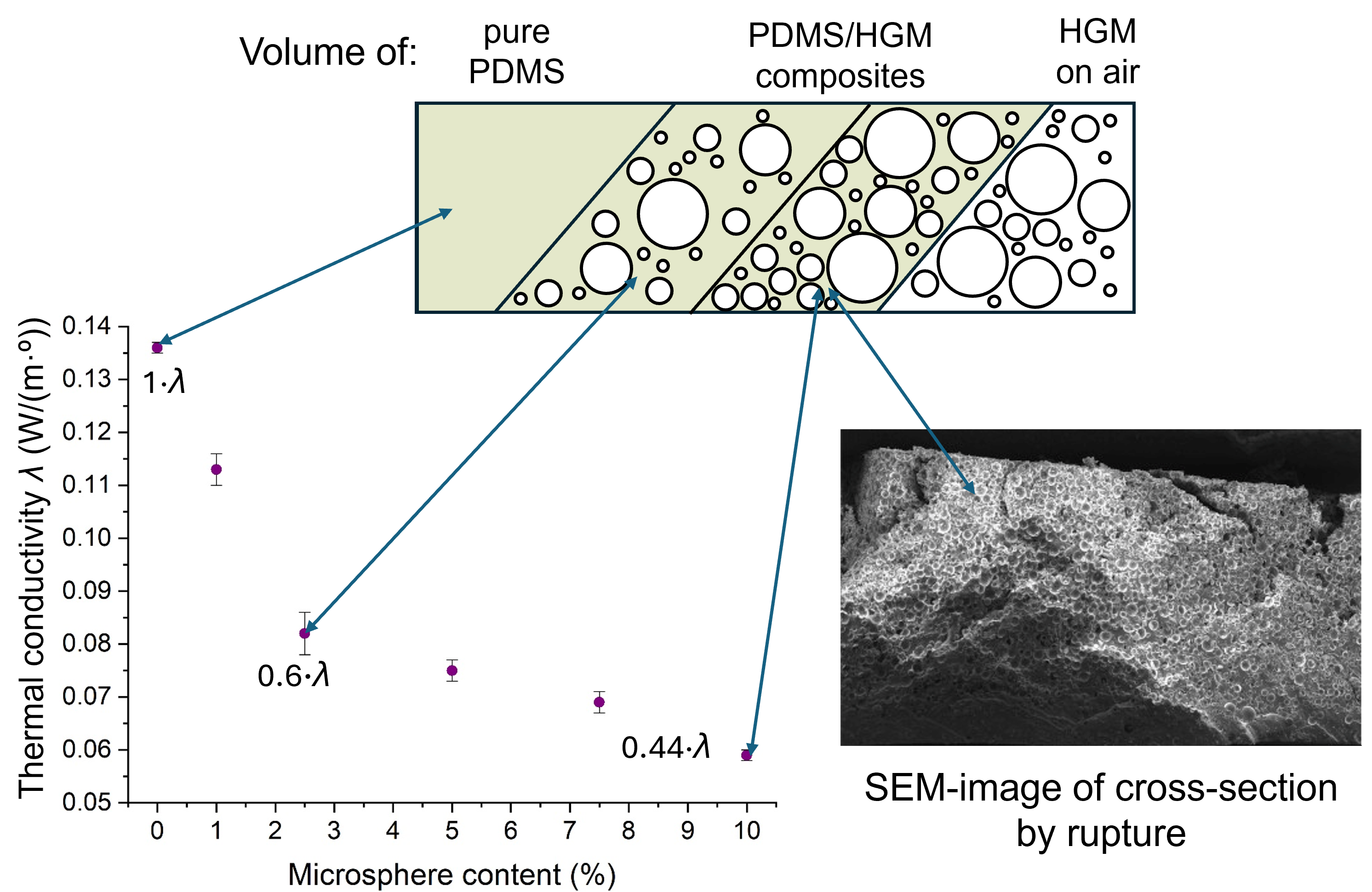
This study aims to enhance the thermal insulation properties of polydimethylsiloxane by the incorporation of hollow glass microspheres (HGM) as a functional filler, while evaluating the trade-offs in mechanical, surface, and optical performance. The thermal conductivity, tensile mechanical properties, surface characteristics, and optical transparency of the composites were investigated. The incorporation of 10 wt.% hollow glass microspheres decreased the thermal conductivity coefficient by 56.3%, achieving a minimum value of 0.059 W·m–1·K–1. However, this enhancement came at the expense of optical transparency, surface properties, and a significant reduction in the critical elongation at the break. The results demonstrate that HGM-filled polydimethylsiloxane composites are promising materials for thermal insulation applications where transparency and stretchability are secondary to thermal performance.
Keywords
Thermal conductivity; Microspheres; Adhesion; Polydimethylsiloxane; Composite materialFundings
Ministry of Science and Higher Education of the Russian Federation: project no. FSER-2025-0005.

This is an open access article under the terms
of the CC BY-NC 4.0 license.
Metadata is available under the terms of the CC BY 4.0 license